
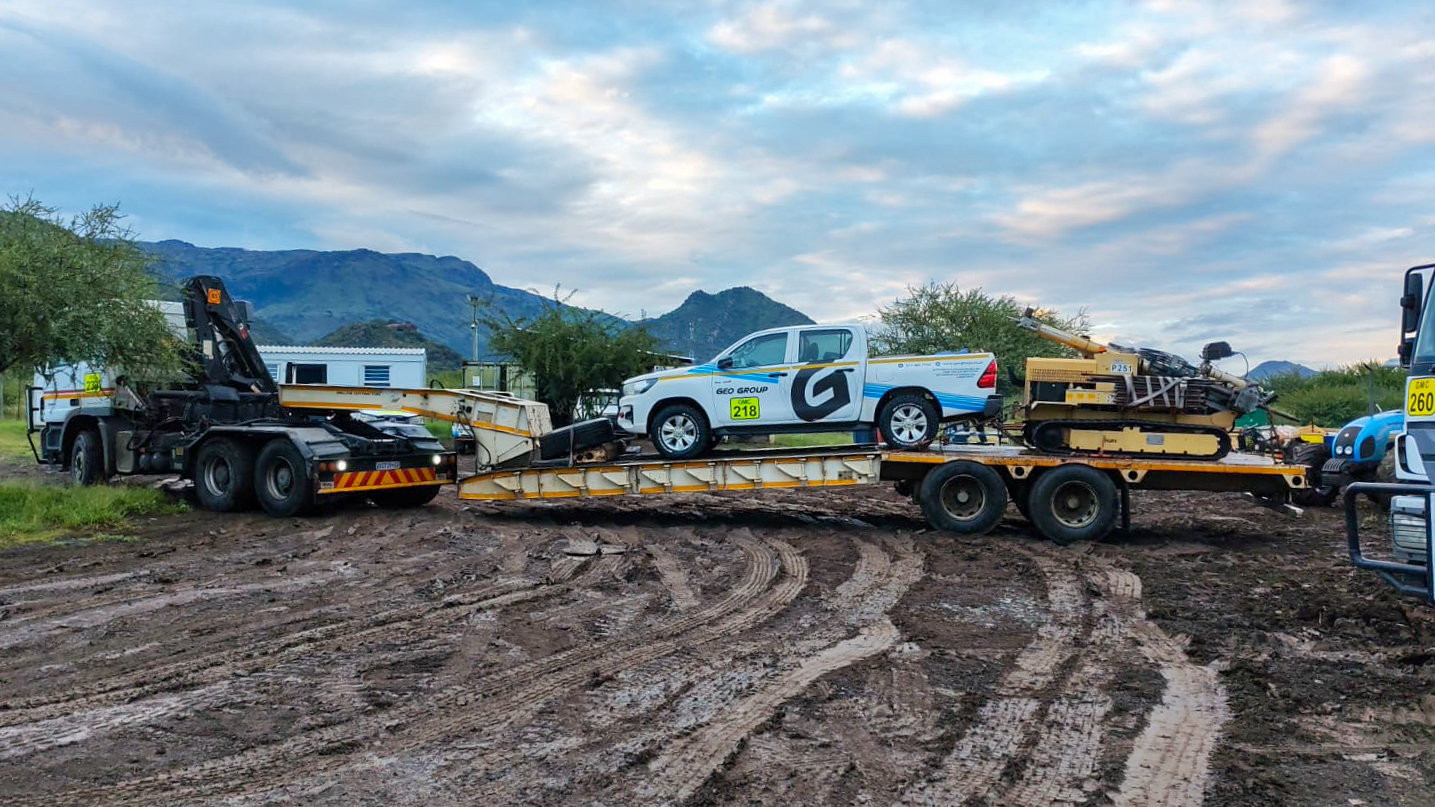
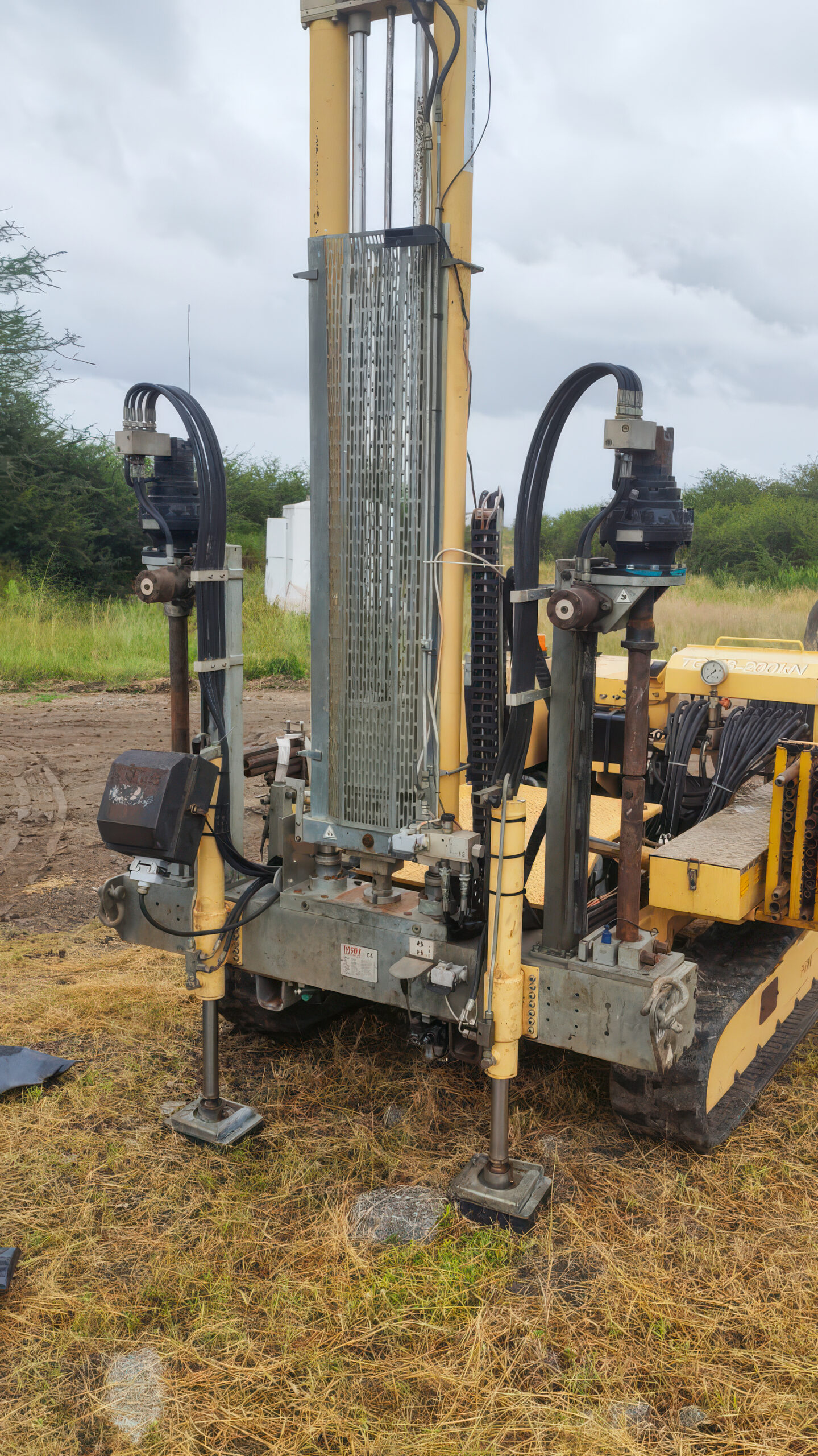
Geomech Africa recently concluded a successful and intensive one-and-a-half-month geotechnical profiling campaign on two Tailings Storage Facilities (TSFs) located at a prominent platinum mine in South Africa. The primary objective of the project was to execute precise piezocone penetration testing (CPTu) and continuous soil sampling to evaluate the subsurface profiles and provide data for stability assessments of the TSFs.
To achieve continuous, high-quality data extraction across both facilities, Geomech Africa deployed a dedicated four-person field crew operating two testing rigs simultaneously.
Dual-Rig Operational Strategy
The campaign relied on a split-rig strategy to maximise efficiency and production while meeting the technical requirements of the investigative scope:
- Rig 1 (High-Production CPTu Testing): This rig focused strictly on high-production piezocone penetration testing, advancing the cones systematically to capture continuous pore water pressure, tip resistance, and sleeve friction data.
- Rig 2 (Dual-Purpose CPTu & MOSTAP Sampling): This setup was tasked with a dual-purpose role, combining standard CPTu testing with continuous MOSTAP soil sampling to retrieve high-quality MOSTAP samples of the tailings material for laboratory testing.
Critical operational support was provided across both rig setups, ensuring seamless rod handling and strict adherence to testing intervals. Additionally, during the final two weeks of the project, a junior technical member joined the site team to shadow the operations, gaining firsthand experience in the technical aspects of CPTu testing and MOSTAP sampling.
Overcoming Complex Site Engineering Challenges
Geotechnical investigations on active tailings facilities often demand dynamic adaptation to shifting site conditions. The Geomech Africa crew successfully navigated two major technical and logistical bottlenecks on the ground:
Restricted Bench Access: During the initial deployment on the first facility, the team discovered that the structural benches were far too narrow and heavily overgrown with dense vegetation and trees for the heavy tracking rigs to pass safely. To keep the project on schedule, the Site Supervisor engaged directly with the facility’s earthworks management team. A collaborative solution was coordinated to deploy front-end loaders for extensive bush clearing, road widening, and levelling. This transformed the overgrown benches into safe, stable access routes, allowing the rigs to position safely and efficiently.
Active Slurry Deposition: At the second facility, active mine operations were depositing water and mineral tailings slurry directly over two pre-planned testing positions. Setting up heavy rigs on shifting, saturated material posed an immediate safety and data integrity risk. The supervisor immediately flagged this with the consulting engineering representatives on-site. Working together, the teams engineered an adaptive strategy, pivoting to test strategically adjacent, previously established positions. This allowed the crew to safely obtain deep comparative profile data representative of the facility conditions without interrupting the active deposition lines.
Delivering Technical Excellence Safely
Through strong communication, technical adaptability, and dedicated teamwork, the Geomech Africa crew delivered high-quality geotechnical data safely and within the required timeline. By collaborating effectively with cross-functional site logistics and engineering consultants on technical variations, the team proved their capacity to manage sensitive, complex environments.