
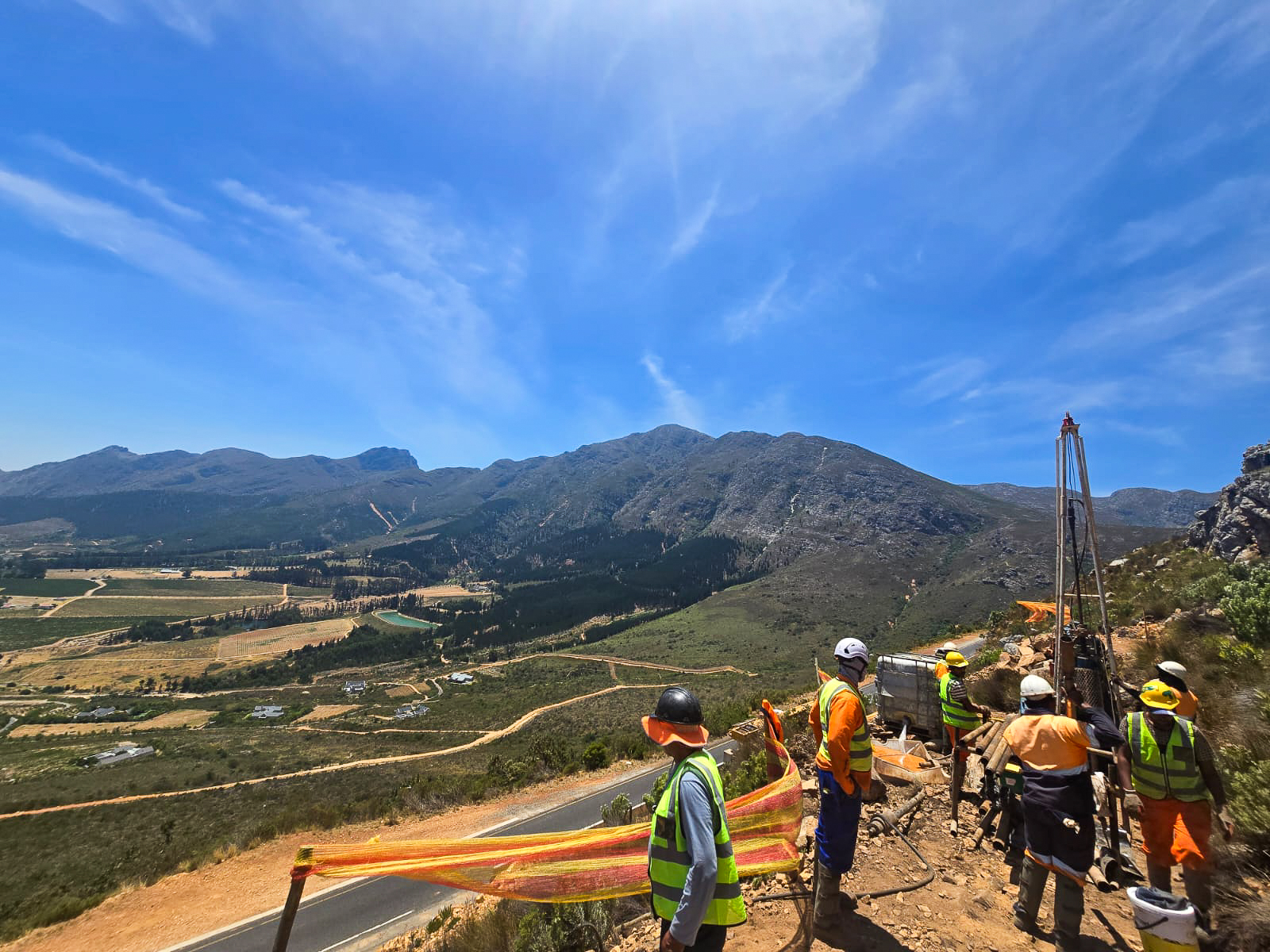
In November 2025, the Geomech Africa Cape Town team was commissioned to tackle a technically demanding geotechnical investigation on the iconic Franschhoek Pass in the Western Cape. The project required the drilling of three 15-metre boreholes and to install piezometers on a precarious slope failure, situated roughly 20 metres above and 30 metres back from the main roadway.
The location presented a significant logistical hurdle: the terrain was too steep and unstable for conventional rig deployment. To ensure the safety of our crew and the integrity of the crest, our Cape Town branch developed a strategy to get all the drilling rigs to the top of the slope safely.
Precision Logistics and Crane Operations
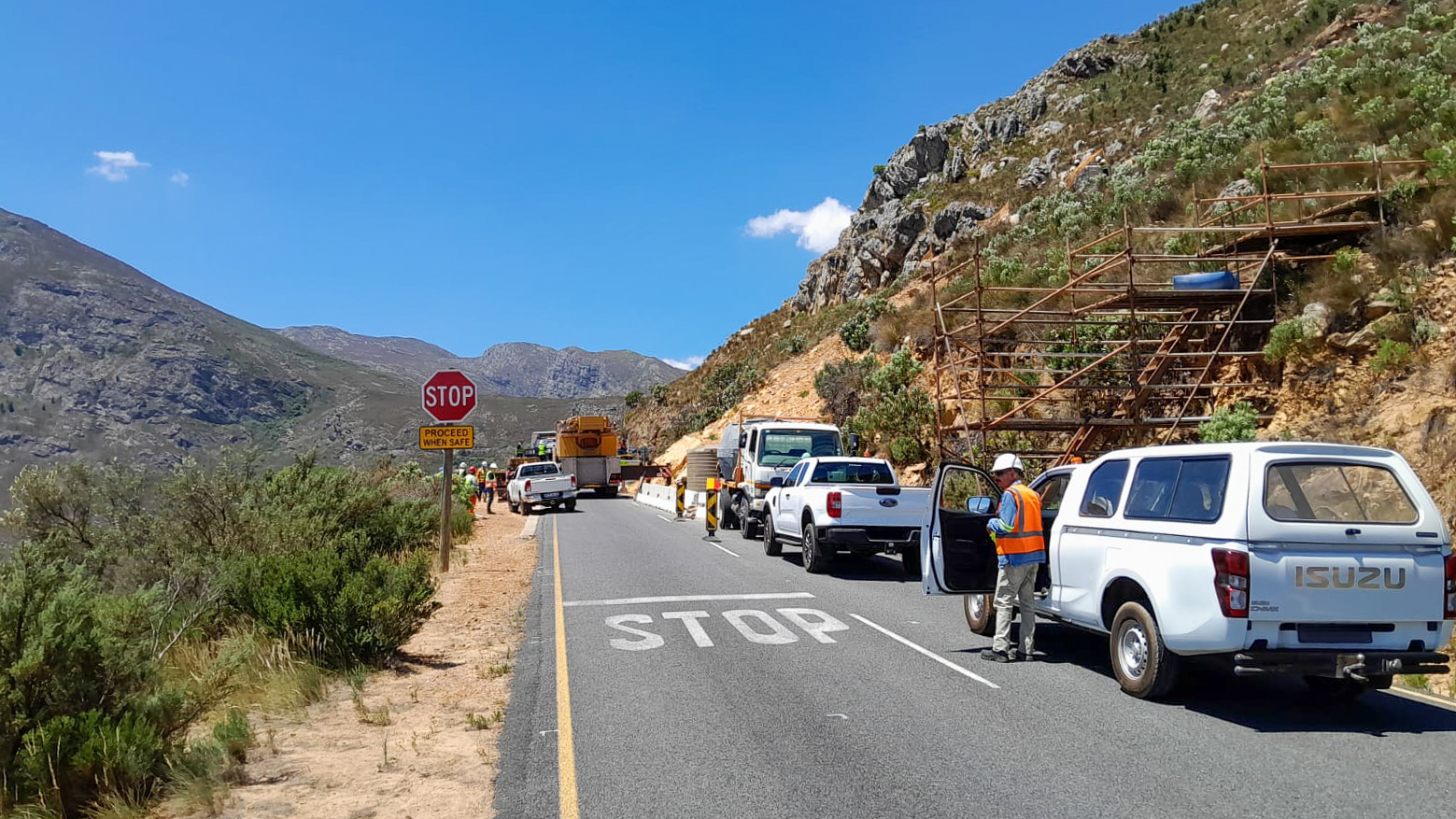
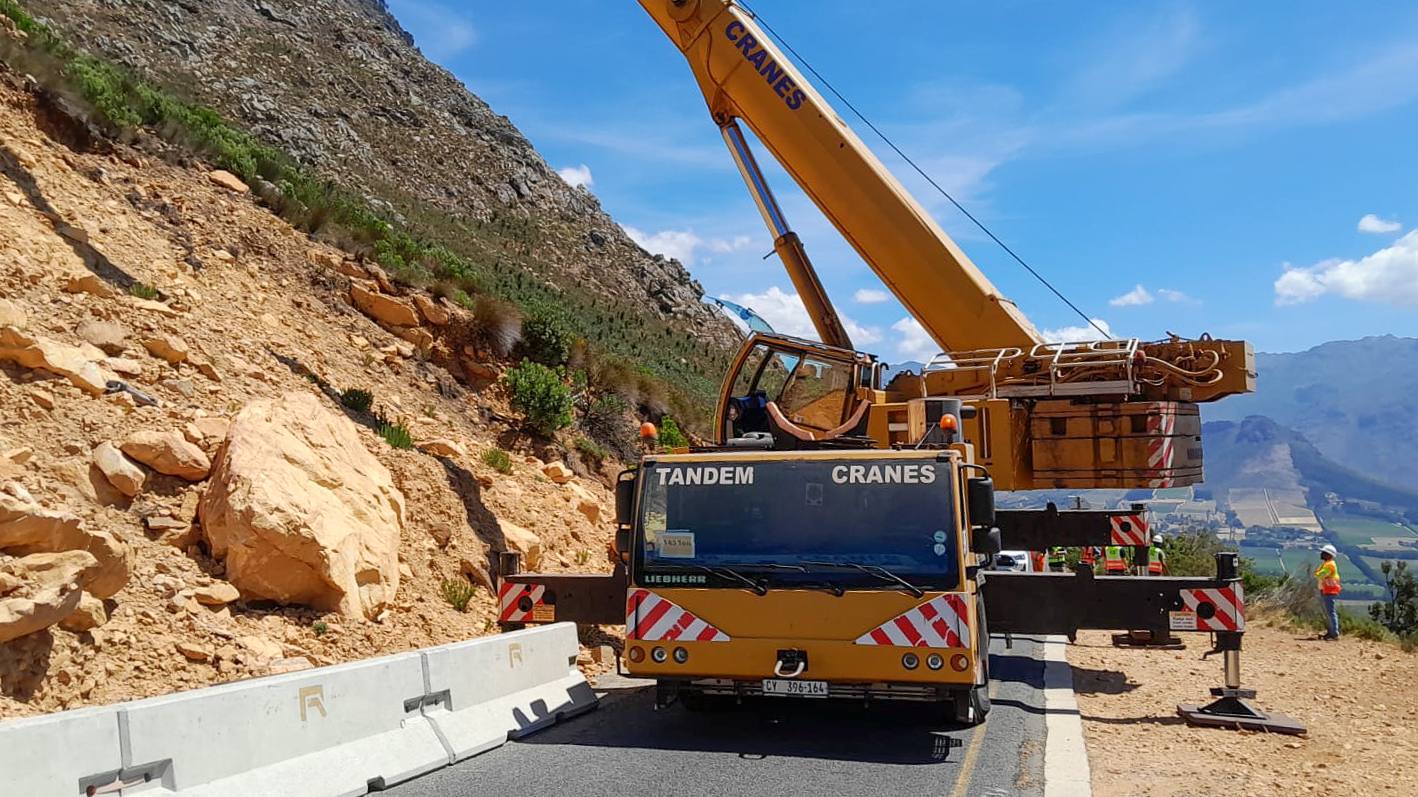
Because the drilling positions were inaccessible by vehicle, GeoGroup partnered with heavy-lifting specialists to mobilise an 80-tonne crane. Occupying a section of the Franschhoek Pass under strict traffic accommodation, the crane became the lifeline for the operation:
Crane Deployment: The drilling rig was reversed into position on a GeoGroup crane truck, then slung by the 80-tonne crane and hoisted directly onto the first pre-prepared platform on the slope.
Strategic Shifting: While two of the borehole positions were close enough for the crew to manually manoeuvre the trailer-mounted rig between platforms, the third position required the crane to return for a second major lift to manoeuvre the rig onto the third platform.
Final Recovery: Once the drilling and testing were complete, the crane performed a final lift to return the equipment safely to the transport vehicle below.
Manual Site Preparation and Access
Parallel to the mechanical lifting, a dedicated team of six labourers worked on foot to establish a safe working environment. This involved:
Scaffold Staircase: Constructing a temporary staircase to allow the crew safe access to the elevated platforms.
Hand-Dug Platforms: Carefully excavating three leveleled platforms at the crest of the slip failure to support the weight of the rig without further compromising the soil.
Manual Transfers: Carrying lighter equipment and tools up the slope by hand, while the crane handled the heavy machinery.
Technical Results
Despite the restricted movement and the complexities of working on an active slip, the team successfully completed the Standard Penetration Testing (SPT) and installed piezometers at the required depths. These instruments will provide the client with critical data on groundwater levels and soil stability, which are essential for designing long-term remedial measures for the pass.
The project was completed with a focus on minimal public disruption. While the crane operations necessitated a temporary “stop-and-go” system, the team transitioned to a standard lane closure for the remainder of the drilling, ensuring that one of the Western Cape’s most scenic routes remained functional throughout the investigation.