

Project Objective
On the 16th of July 2019, Geomechanics was contracted to do CPTu testing at the Langer Heinrich Uranium mine in Namibia on existing Tailing Storage Facilities (TSF), also known as Tailing Dams. The tests were spread out over 3 different TSF’s; TSF1, TSF2 & TSF3. Langer Heinrich Uranium intends to modernize the process by which Uranium is mined at LHU and as a result, could extract further Uranium from the already discarded tailings if it is put through the new process. The overall objective of the CPTu tests was to establish whether the tailings requires wet (requires pumping – a slurry form) or dry (requires excavation – solid form) mining once this process commences. A secondary objective was to establish whether TSF2 possessed suitable internal structural strength to be loaded with additional tailing material, on top of the existing tailing material.
Project Overview
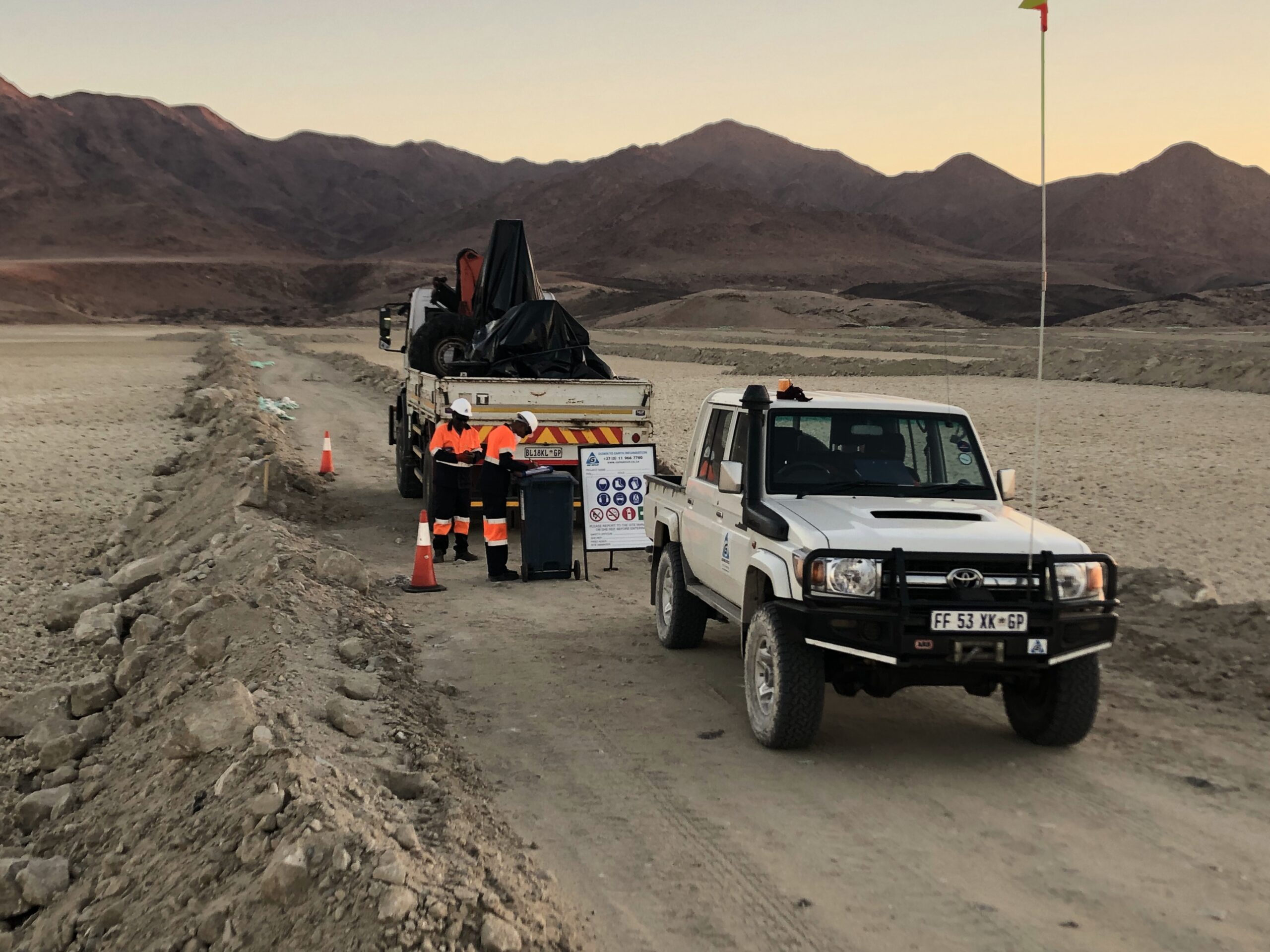
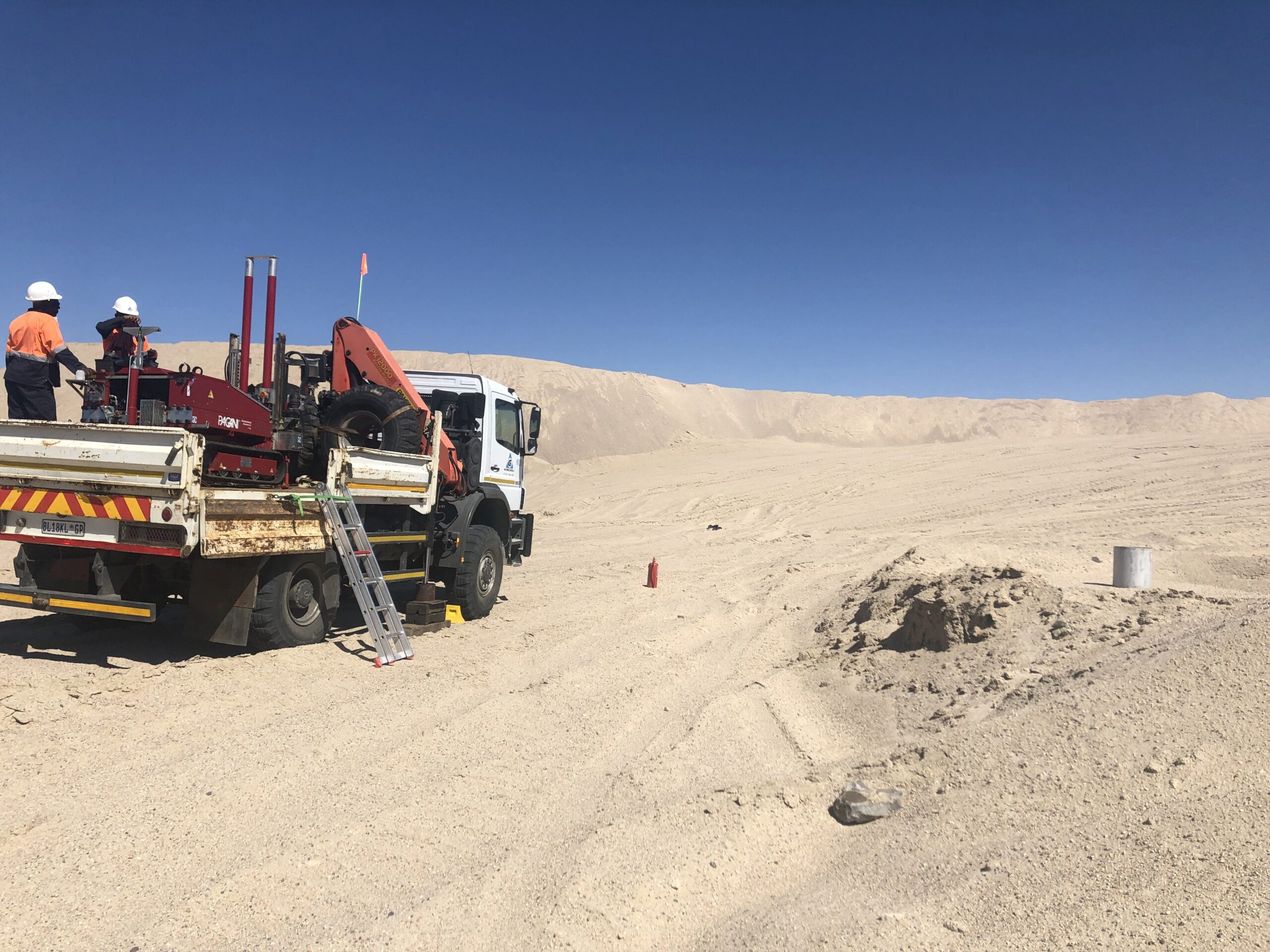
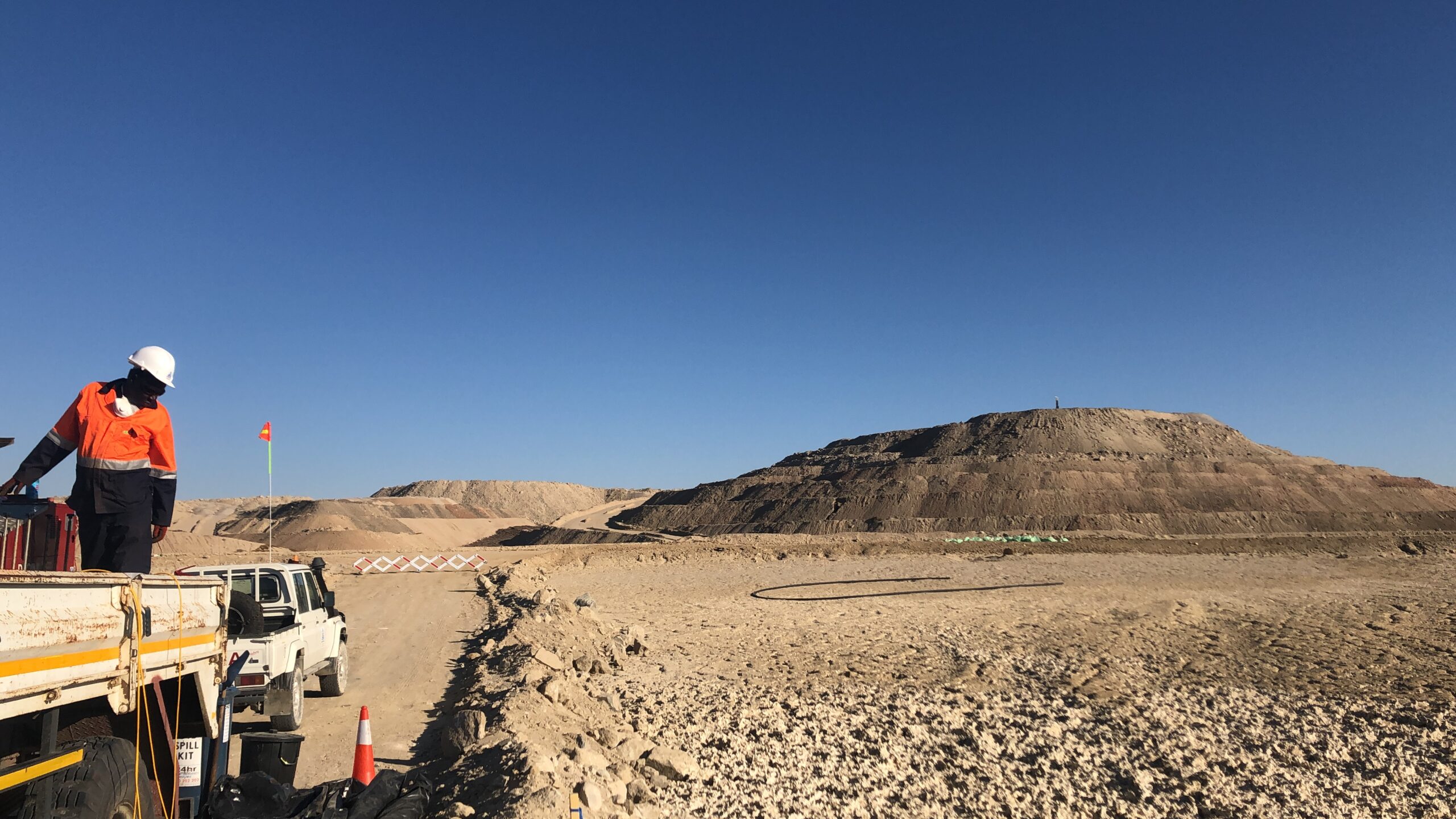
Tailings consists of a very soft material and would not normally allow for a heavy vehicle to move around on its surface. This would be a serious HSE risk. This provided a challenge as the CPTu rig was mounted on top of an 8-ton crane truck for quick and easy manoeuvring and set-up between positions. The solution was to construct causeways on top of the tailings of sufficient thickness to provide suitable support for the truck as it drives on the tailings. These causeways were constructed using mine spoil which consists of grading with a very wide range, from fine-grained sand to very large diameter boulders. This presented a challenge in that the CPTu rig would not be able to probe through this boulder layer ranging from 1.8 m to 0.3 m. To resolve this, we excavated through the causeway to the top of tailings and then parked the truck over this excavation to commence testing. This presented a few challenges: the risk of the hole collapsing while the truck is manoeuvring over the excavation & the excessive free length (between the top of tailings and bottom of the truck bed) caused extreme rod flex and on 1 occasion, the rod snapped. We remedied this by backfilling the pre-excavated hole with a fine-grained (barren) sand to reduce the free length to natural ground level (NGL) – this, along with our custom manufactured casing insert provided enough rod support to safely conduct the CPTu tests.
Conclusion
The truck-mounted CPTu rig provides major advantages in that it reduces set-up time per position, reduces travel time between positions, reduces HSE risks by reducing loading/off-loading by crane, the truck acts as kentledge for the CPTu test, all supplementary equipment is loaded on the same truck so drastically reduces mobilisation costs & effort. The project was successfully complete on the 12 of August 2019.